Texas Syndicate Football
Unite The Hustle.
Build The Future.
Pflugerville-Hosted Professional Football for the Central Texas Corridor.
1.7M+
Views & Impressions in 90 Days
10,000
Seat Stadium The Pfield
2.4M+
Austin Metro Population
Coming
Summer 2026
Don’t get left behind!
Days
Hours
Minutes
Seconds
Why Central Texas?
A Rapidly Growing
Sports Market
Texas Syndicate Football is launching in one of the fastest-growing regions in the United States. The Austin metro area, with over 2.4 million residents, continues to expand rapidly, creating strong demand for professional sports and live entertainment.
Surrounded by thriving communities like Round Rock, Pflugerville, and Hutto, the region offers a deep-rooted football culture, a young and engaged population, and limited professional football options—making it the perfect environment for a new franchise to grow.
With a balanced fan demographic and strong local support for high school and college football, Texas Syndicate is positioned to become a central part of the Central Texas sports experience.
2.4M+
Austin Metro
Population
142k+
Round Rock
Population
67k+
Pflugerville
Population
Limited pro options. Unlimited Potentials.
Why Partner With US
Powerful Exposure. Stronger Community.
Massive Digital Reach
Over 1.7 million views and
impressions across social
platforms in just 90 days,
reaching new audiences
and growing weekly.
Game Day Exposure
Connect directly with 1,500+
fans per game through
stadium branding, activations,
and in-game promotions.
Community Engagement
Build trust and visibility
through local partnerships,
youth programs, and
community-driven events.
Live Broadcast Visibility
Reach audiences beyond the
stadium with live-streams,
ads, and commercial placements,
and sponsor mentions.
Verified Media Performance
1.04M+
Views 137K+ Accounts Reached 83% New Audience Discovery385K+
Impressions 16K+ Engagements 4.2% Engagement Rate300K+
Views1,100% Growth
Rapid Audience Expansion
Sponsorship Opportunities
Flexible Packages for Businesses
Round Rock Proud
$500
• Website Sponsor Listing
• Social Media Welcome Post
• Banner Placement
• 2 Game Tickets
• Team Merchandise
MOST POPULAR
Hutto Proud
$1,000
• Website Listing + Social Promotion
• Banner Placement
• 4 Game Tickets + Parking
• Digital Ads Included
Pflugerville Proud
$1,000
• Premium Tickets + Ads
• Broadcast Commercials
• Poster & Program Placement
• Expanded Brand Visibility
Our Home Stadium
The Pfield – Pflugerville, TX
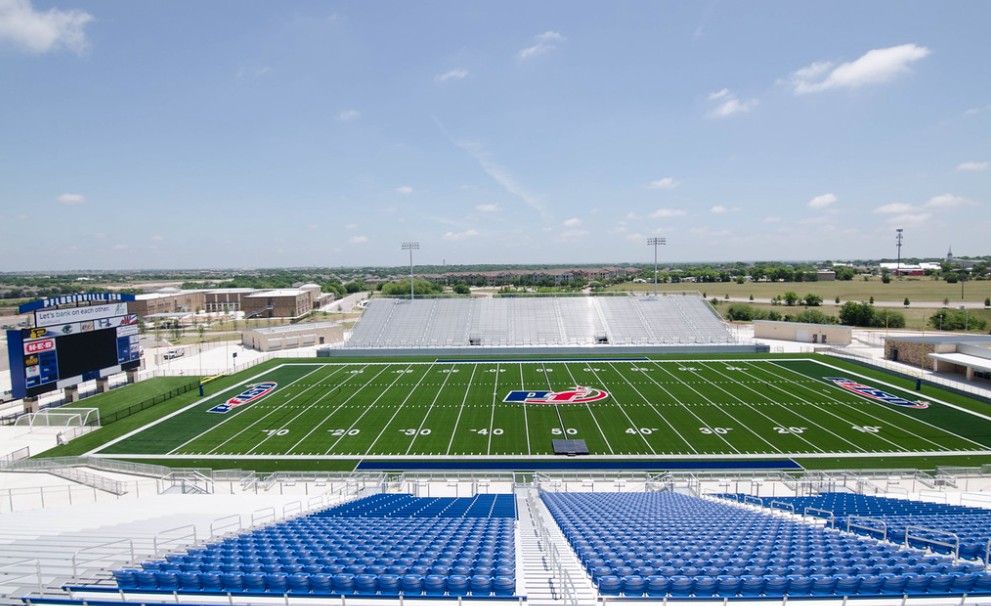
- 10,000-seat capacity
- 3,500 parking spaces
- Digital media board
- Located in the heart of Central Texas
1440 W Pecan St, Pflugerville, TX 78660
Be A part of Our Future
Own a Piece of
Texas Syndicate Football
Texas Syndicate Football is Central Texas’s first community-owned
professional football team. Through our Wefunder campaign,
supporters can become part of the organization and help build
a mission-driven sports brand from the ground up.
- Community ownership starting at $100
- 2026 inaugural season launch
- Home stadium secured
- Athlete-focused mission
Experience the Heartbeat of Texas Football
Our Services
We offer a comprehensive range of offerings tailored to meet the diverse needs of our community and stakeholders. Our services are designed to provide a holistic experience that goes beyond the game, encompassing player development, community engagement, event production, and sponsorship activation. Each service is crafted with precision and care to ensure that every interaction with Texas Syndicate leaves a lasting impact and fosters a sense of unity and excellence within our organization and the communities we serve.

Professional Football Team
Hosting competitive 11-man football games during the spring and summer seasons.
Player Development & Exposure
Providing a platform for local athletes to train, compete, and gain exposure to higher-level opportunities.
Community Outreach
Partnering with schools, nonprofits, and youth organizations to host mentorship programs and football clinics.
Event Production
Coordinating engaging game-day experiences, including halftime entertainment and fan zones.
Sponsorship Activation
Offering marketing and promotional opportunities for local businesses through sponsorship packages.
Performance With Purpose
Athlete Mental Health
Supporting the well-being and long-term success of our athletes.
Youth Development
Creating opportunities for young athletes to grow and succeed.
Community Impact
Building strong connections through outreach and local partnerships.
What sets us apart
- Texas-Raised and community-driven
- Family-Friendly Entertainment
- Inclusive Culture & Brotherhood
-
Professional Standards,
Semi-Pro Accessibility - Athlete-Centric Approach
Join the Texas Syndicate Insider List
Don’t miss a moment! Be first in line for new merch, tickets, and player news.